Most brand voice work lives in decks. This one lives at a URL. I used the Claude API and Next.js to build a tool that pulls copy from any site and gives you a structured voice breakdown including tone, word tendencies, personality details. In seconds(ish).
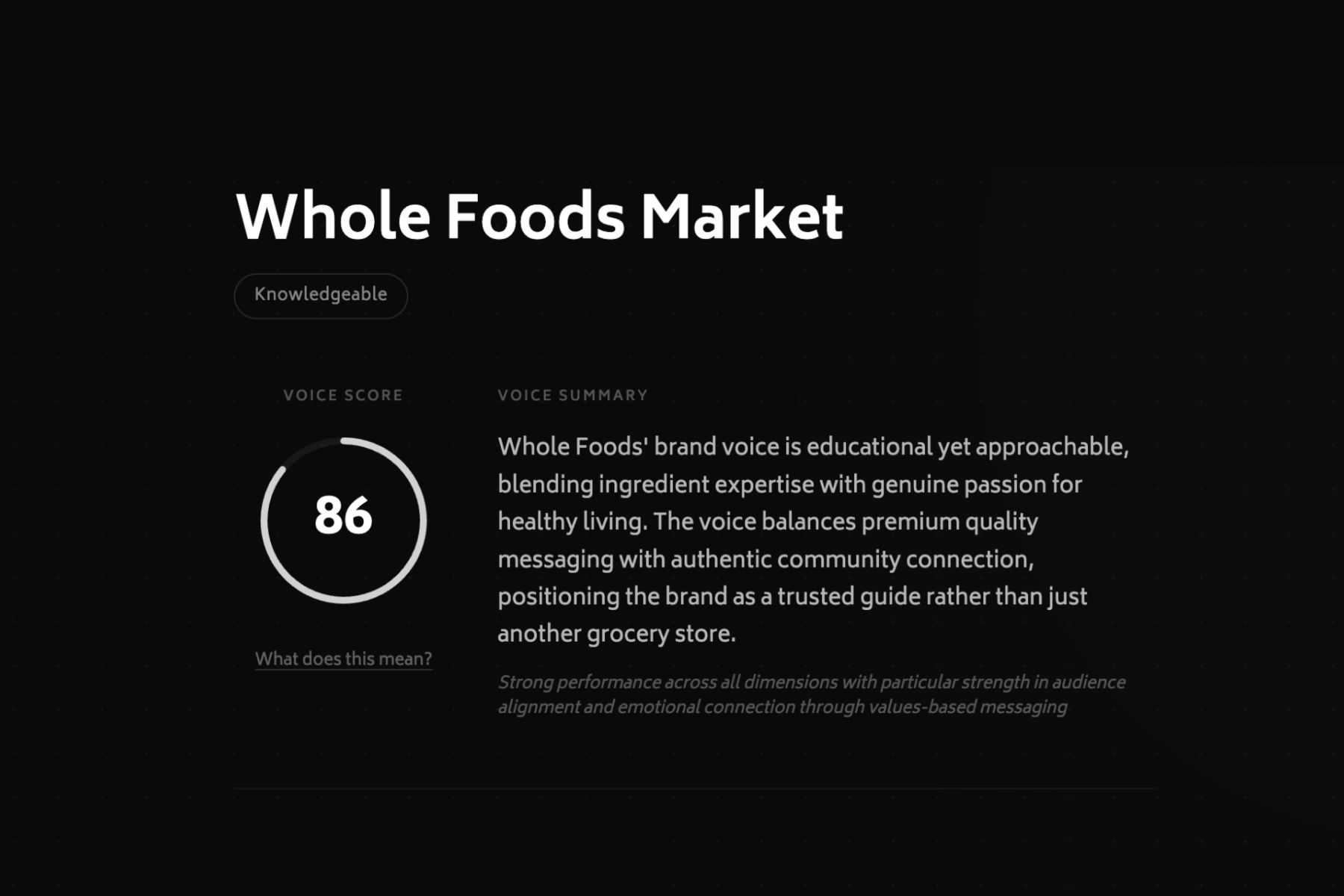
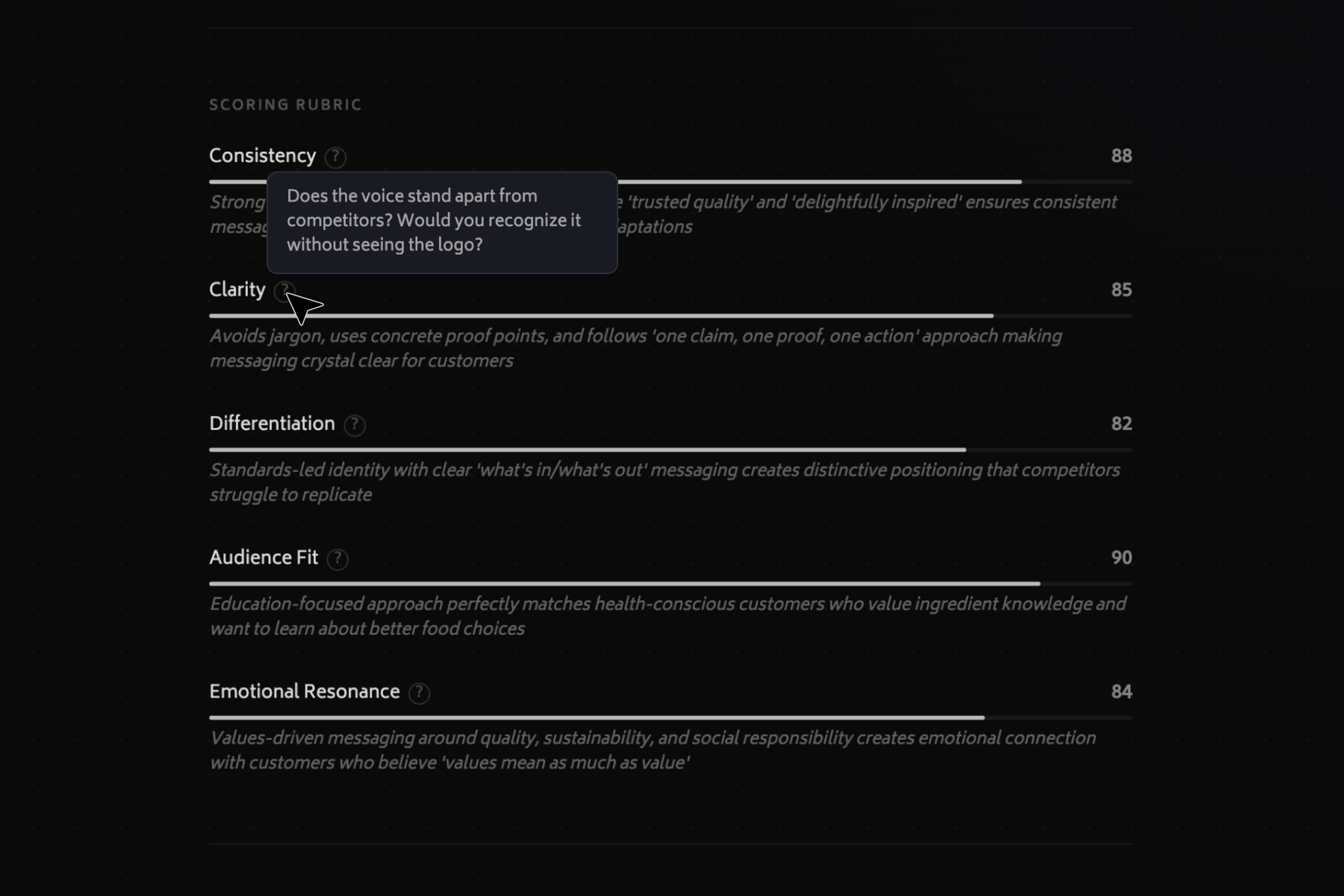
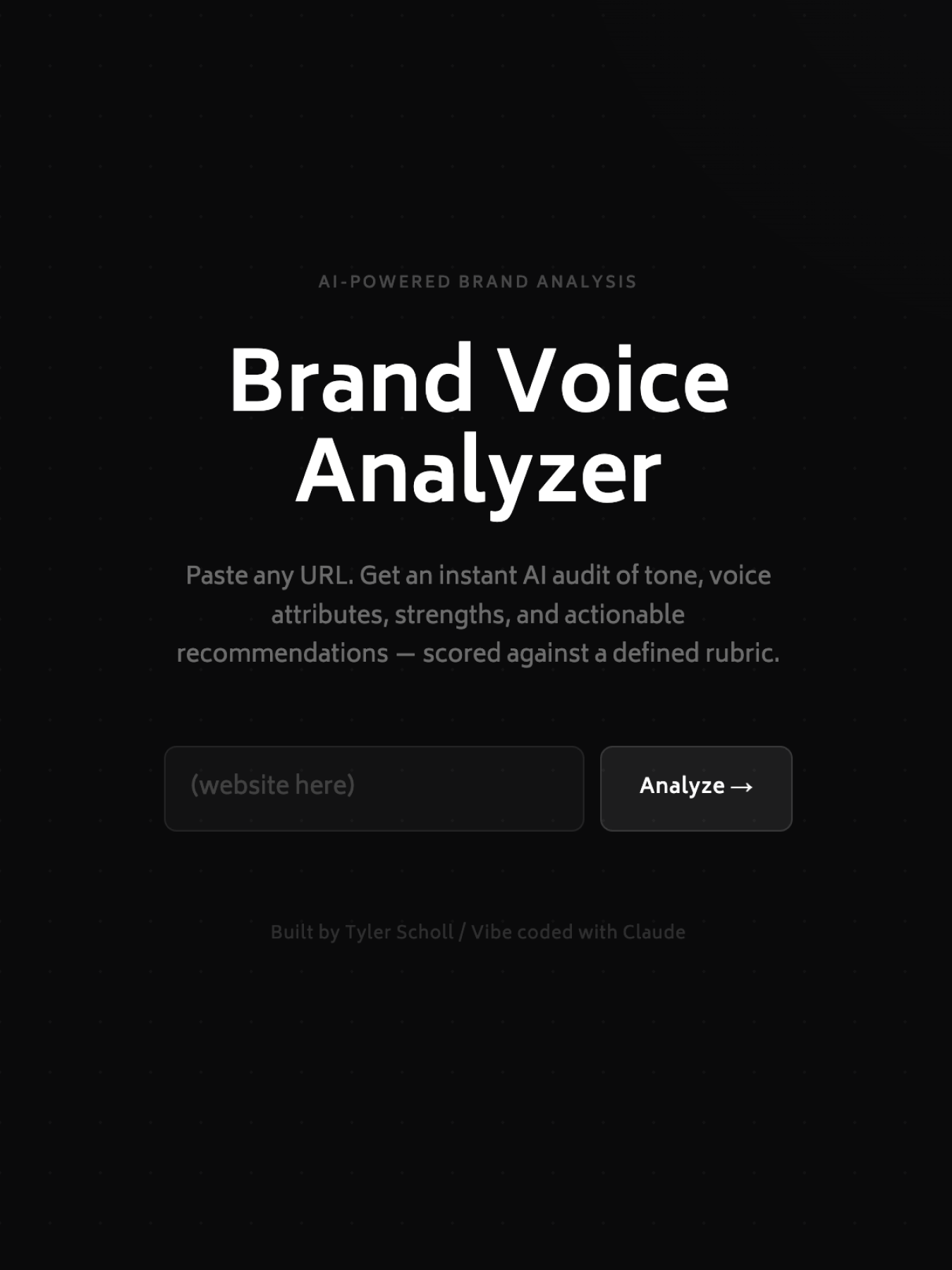
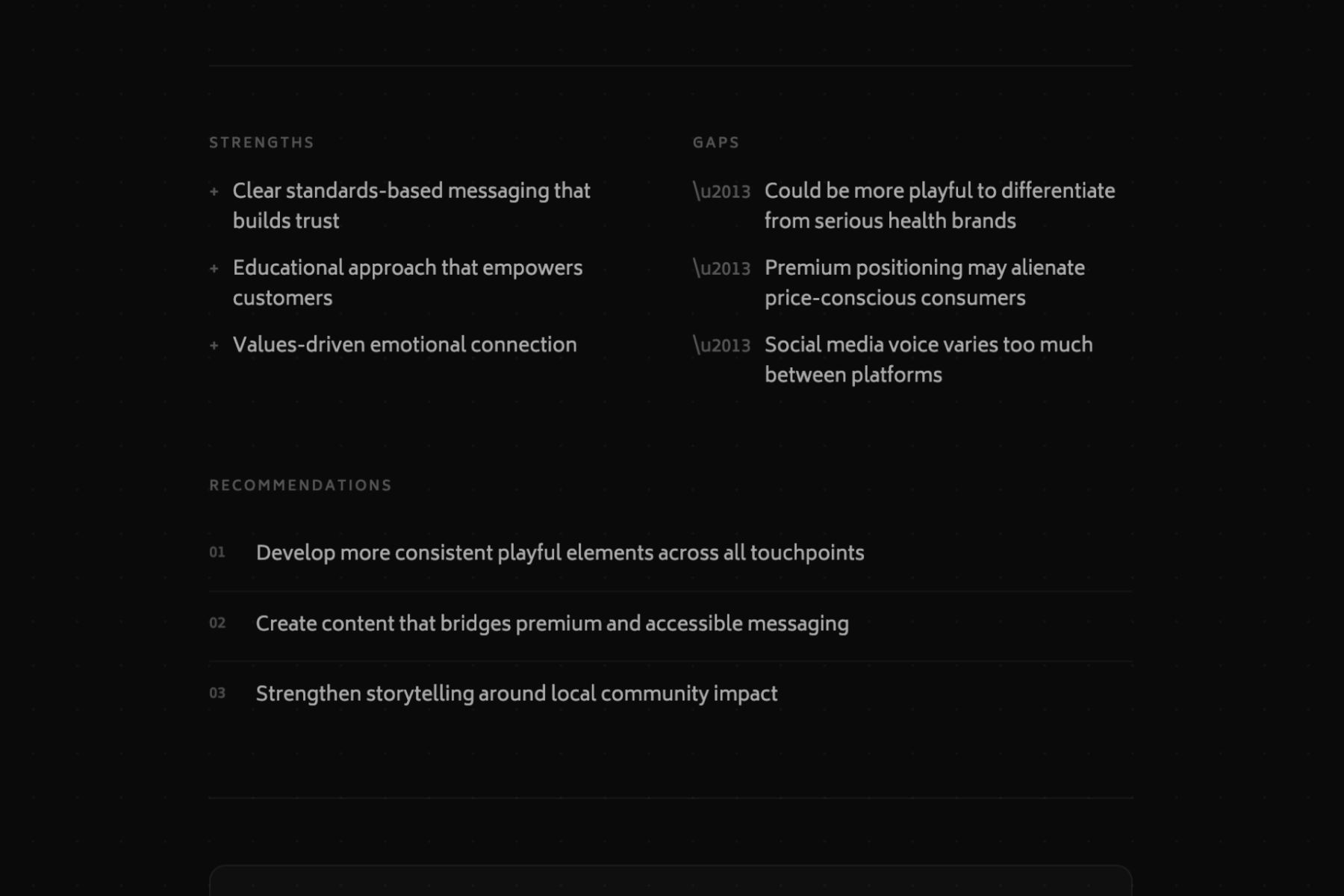
What's their messaging? I wanted a tool that could surface the personality behind a brand's language fast and comprehensively, while being concise and frocused.
So I built one.
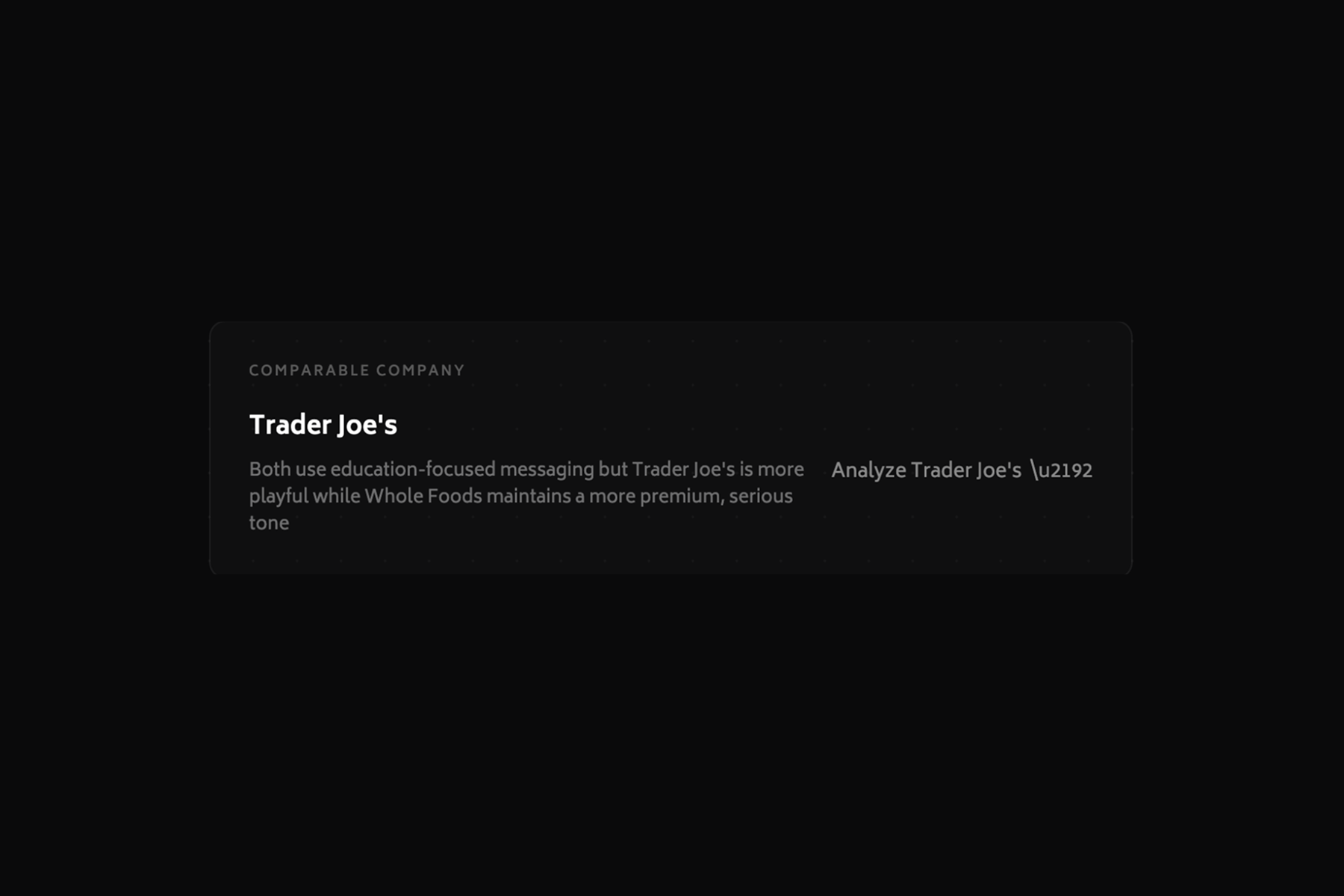
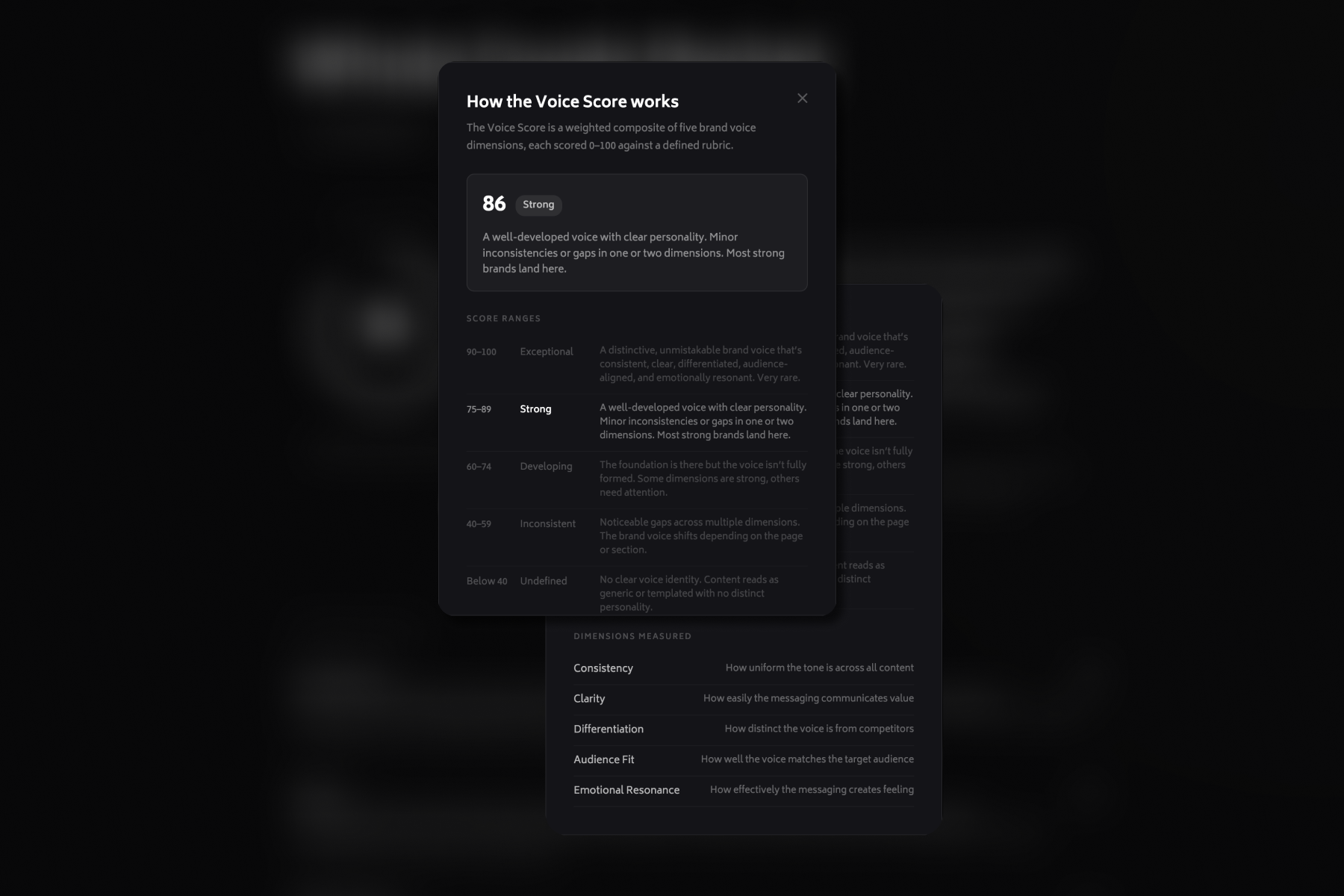
Using Next.js and the Claude API, the Brand Voice Analyzer scrapes a URL processes the copy, and returns a structured voice profile: tone dimensions, word tendencies, what the brand sounds like and what it doesn't. Deployed on Vercel and live at brand-voice-analyzer.vercel.app.
This is early in my vibe-coding journey. This wasn't a flawless build, there was a lot of prompting, debugging, and learning what the tool wanted to be as I went. But that process was kind of the point. I came out with a better instinct for where AI accelerates design work and where human judgment still has to lead.
The potential is real. A tool like this could sit at the start of any brand, marketing or product engagement to give a team shared language to keep aligned on.
"I’ve had the pleasure of working alongside Tyler on several high-stakes projects, and he is, hands down, one of the most talented product designers I’ve worked with. Tyler has that rare ability to zoom out and understand the high-level business strategy, then zoom back in to execute pixel-perfect designs."
“What truly sets Tyler apart is his judgement. He knows when to push, when to simplify, and how to guide teams toward ambitious outcomes without sacrificing focus or momentum. His leadership raises the quality of both the work and the people producing it, resulting in products that scale, perform, and stand out in the market.”

